

For expectant parents, learning that an ultrasound scan revealed something odd can be a terrifying experience. The existence of echogenic kidneys in the fetus is one such discovery. Even though this term could seem confusing, knowing what it means, why it occurs and how it is identified can help ease the family’s concerns.
Echogenic Kidneys in the Fetus: An Overview
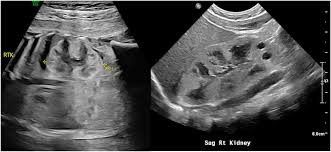
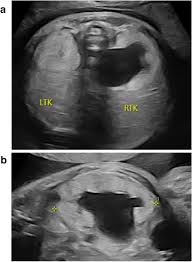
Echogenic Kidneys, also called hyperechogenic kidneys, appear brighter than usual during a mid-trimester ultrasound scan. This finding may be a singular occurrence or linked to a number of underlying kidney disorders.
Possible Reasons for Echogenic Kidneys
There are several potential explanations for this finding and they can range from mild and temporary to more significant. Some of the common causes include:
- Normal variation – In some babies, the kidneys may appear bright without any underlying problem. The baby continues to grow well and kidney function after birth is normal.
- Genetic or inherited conditions – Certain syndromes or inherited kidney disorders can present with echogenic kidneys. These are usually considered if there is a family history or if other anomalies are seen on the scan.
- Structural kidney problems – Cystic kidney disease, obstruction of urinary flow, or abnormal development can make the kidneys look brighter.
- Chromosomal conditions – Occasionally, echogenic kidneys can be one of several ultrasound findings associated with chromosomal abnormalities.
Why Further Evaluation Is Important?
An isolated finding of echogenic kidneys often needs to be placed in the wider context of the pregnancy. A fetal medicine specialist will usually:
- Review the detailed ultrasound scan to check for any additional findings.
- Assess the amniotic fluid levels, as the baby’s urine is the main contributor to fluid after the mid-pregnancy stage. Too little fluid can indicate impaired kidney function.
- Consider whether genetic testing may be appropriate, especially if other abnormalities are present.
- Arrange follow-up scans to monitor growth, fluid levels and kidney appearance over time.
This step-by-step evaluation helps distinguish between a benign variation and a condition that may need closer monitoring or planning after delivery.
Here’s What Parents Should Know:
It is natural for parents to worry when something unexpected appears on a scan, but it is important to keep in mind:
1. It’s not always serious
Many babies with echogenic kidneys are born completely healthy and never face kidney-related issues.
2. Expert advice is beneficial
Clarity can be obtained by speaking with a fetal medicine specialist, who will explain the likelihood of various outcomes and the following actions.
3. Observation is essential
Fetal Medicine Experts can monitor the baby’s growth and amniotic fluid through routine ultrasound examinations, which help them foresee any potential delivery-related issues.
Diagnosis & Management of Echogenic Kidneys in the Fetus At Precious Clinic
A fetus with echogenic kidneys is not a diagnosis in and of itself; rather, it is a finding that calls for additional testing. It turns out to be a harmless variation for a lot of newborns. For others, it can indicate an underlying illness that can be treated with consistent planning and observation.
If you or a family member is looking for the guidance of a Fetal Medicine Specialist in Pune, Dr Tejas Tamhane can help you navigate this uncertainty with the right information, timely investigations and a well-prepared care plan for your baby’s arrival.
