

Understanding when an invasive test may be needed can help expectant parents move forward with clarity. If you or a loved one is considering an invasive prenatal test in Pune, a detailed consultation with Dr Tejas Tamhane can help.
Invasive Prenatal Test In Pune
Pregnancy brings many moments of joy and comfort, but sometimes screening results or ultrasound findings can raise concerns as well. One of the most common concerns expectant parents share is whether they should proceed with an invasive prenatal test.
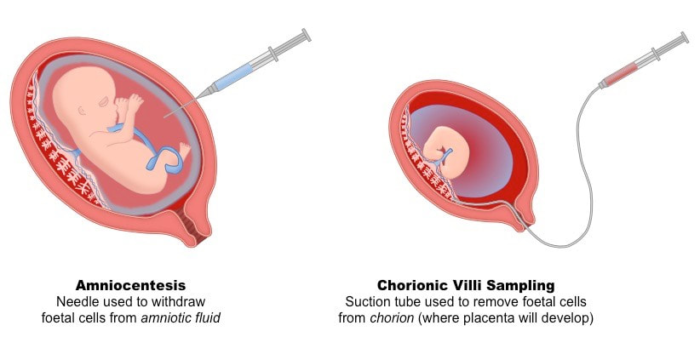
To begin with, it is important to know the difference between screening and diagnostic tests. First-trimester screening, non-invasive prenatal testing (NIPT) and detailed ultrasound scans are designed to assess risk. They do not provide a definitive diagnosis. On the other hand, invasive prenatal tests like amniocentesis or chorionic villus sampling (CVS) can confirm with much greater certainty whether the baby has a specific chromosomal or genetic condition.
So, When Should You Consider An Amniocentesis or CVS?
- One of the most common situations is when a screening test shows a high-risk result for conditions like Down Syndrome (Trisomy 21), Trisomy 18 or Trisomy 13. While NIPT is highly accurate, it is still a screening tool. If it indicates an increased risk, an invasive diagnostic test is usually done to confirm the finding before any major decisions are made.
- Another scenario is when an ultrasound reveals structural abnormalities. Certain findings, such as increased nuchal translucency, heart defects, brain anomalies or skeletal abnormalities, can sometimes be associated with chromosomal or genetic conditions. In such cases, diagnostic testing helps determine the underlying cause and guides further management of the pregnancy.
- A family history of genetic disorders may also require consideration of invasive testing like amniocentesis or CVS. If there is a known inherited condition in the family or if both parents are carriers of the same genetic disorder, diagnostic testing can determine whether the baby is affected.
- Maternal age, especially 35 years or older at the time of delivery, was once a primary reason for recommending invasive testing. Today, with advanced screening methods available, age alone is less commonly the deciding factor. However, it still plays a role when combined with other risk indicators.
When Is It Done?
Timing is an important factor. Chorionic villus sampling is typically performed between 11 and 14 weeks of pregnancy, while amniocentesis is done after 15 weeks.
Both procedures are usually done by a fetal medicine specialist, which involves obtaining a small sample, either placental tissue or amniotic fluid, under continuous ultrasound guidance.
Getting An Invasive Prenatal Test In Pune
It is natural to feel anxious when faced with the possibility of an invasive test. Many parents worry about the procedure itself, the results and what those results may mean for their growing family. A detailed counselling session with a Fetal Medicine Specialist can help clarify any doubts you may have and prepare for what lies ahead.
If you or someone close to you is considering an invasive prenatal test like amniocentesis or CVS in Pune, a detailed consultation with Dr Tejas Tamhane at Precious Clinic for Advanced Fetal Medicine can help you understand your options clearly.
